A6 Paper Size – Complete Guide
When it comes to paper sizes, understanding the specific measurements and applications is crucial for choosing the right fit for your projects. A6 paper size is one of the most commonly used dimensions for smaller printed items, and it plays a key role in the printing and design industries. In this guide, we will break down everything you need to know about A6 paper size, including its dimensions, uses, and how it compares to other popular paper sizes.
What is A6 Paper Size?
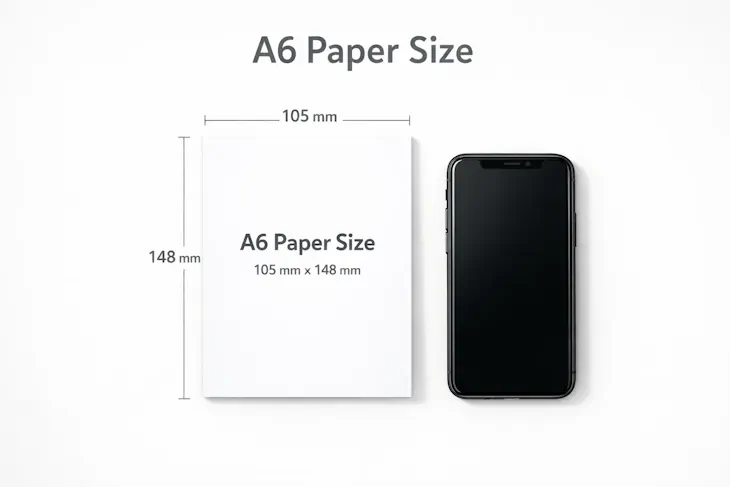
A6 is part of the ISO 216 A-series of paper sizes, a standard used around the world. It is one of the smaller sizes in the series, commonly used for postcards, invitations, and smaller brochures. The dimensions of A6 paper are:
105 × 148 mm
10.5 × 14.8 cm
4.13 × 5.83 inches
A6 paper is often used in smaller, more compact printed materials, offering the perfect balance of portability and print space.
A6 Paper Size Dimensions (All Units)
To ensure you can work with A6 in various contexts, here’s a breakdown of its dimensions in different units of measurement:
| Unit | Width | Height |
|---|---|---|
| Millimeters (mm) | 105 mm | 148 mm |
| Centimeters (cm) | 10.5 cm | 14.8 cm |
| Inches | 4.13 inches | 5.83 inches |
| Pixels (300 DPI) | ~1240 pixels | ~1748 pixels |
A6 Paper is commonly used for printing small items, such as flyers, greeting cards, and mini posters. When working with digital formats, you’ll typically want to design with 300 DPI for high-quality print resolution.
A6 Paper in the A-Series
The A6 size is part of the A-series, which follows a consistent mathematical relationship where each size is half the size of the one before it. Here’s how A6 compares to the other A-series sizes:
A5 is twice the size of A6 (148 × 210 mm).
A4 is four times the size of A6 (210 × 297 mm).
A3 is eight times the size of A6 (297 × 420 mm).
Here’s a simple A-series size comparison:
| Paper Size | Dimensions (mm) |
|---|---|
| A4 | 210 × 297 |
| A5 | 148 × 210 |
| A6 | 105 × 148 |
| A7 | 74 × 105 |
This size hierarchy is crucial for understanding the flexibility of the A-series for various types of documents and prints.
Why A6 Size Is Useful
A6 is incredibly versatile and serves a range of purposes in both professional and creative settings. Here’s why it’s so commonly used:
Compact and Portable
A6 paper is compact, making it ideal for projects that require a portable, easy-to-handle size. Whether you’re handing out flyers, invitations, or creating a small booklet, A6 provides just the right amount of space for effective communication without being too bulky.
Common Applications of A6 Paper Size
Postcards and Greeting Cards: A6 is widely used for postcards and personalized greeting cards, offering a large enough space for messages and designs.
Invitations and Announcements: A6 is the ideal size for formal invitations, save-the-date cards, and other announcements due to its elegant yet compact design.
Flyers and Brochures: Small businesses often use A6 for promotional materials like flyers and brochures that are easy to distribute and carry.
Notepads and Small Calendars: A6-sized notepads are perfect for on-the-go note-taking, while small calendars can fit perfectly in an A6 format.
A6 in Printing and Digital Workflows
Whether you’re printing at home or professionally, A6 paper size is compatible with most printers, provided they support smaller paper formats. Here’s what you need to know for working with A6 in both printing and digital environments:
Printer Compatibility
Home printers may require a manual feed tray or custom paper size settings in order to print on A6 paper. Always check your printer’s specifications to ensure it supports A6.
Commercial printers typically handle A6 without issue, as it’s a common size for postcards, flyers, and marketing materials.
Digital Design Considerations
When designing for A6 in software like Adobe Illustrator or Photoshop, ensure you set the canvas size to A6 dimensions (105 × 148 mm) and work at a resolution of 300 DPI for print-quality results. This ensures your designs come out crisp and clear when printed.
Bleed and Trim Areas
For professional printing, it’s essential to account for bleed (the area outside the design that gets trimmed off) and trim lines. This ensures no critical elements of your design are cut off during the printing process.
A6 Paper Orientation
Like other paper sizes, A6 can be used in either portrait (vertical) or landscape (horizontal) orientation. Depending on your project, you may choose one over the other.
Portrait Orientation: Ideal for greeting cards, invitations, and calendars.
Landscape Orientation: Often used for brochures or wide-format cards.
The orientation you choose can impact the layout and design flow, so ensure that it aligns with your intended message or visual theme.
A6 Paper vs Other Paper Sizes
Here’s how A6 compares to other popular paper sizes:
A6 vs A5
A6 is half the size of A5, making it perfect for smaller projects, while A5 is more commonly used for notebooks or larger flyers.
A6 vs A4
A6 is 1/4 the size of A4. A4 is more suited for documents, while A6 is often used for smaller, compact prints like business cards or small invitations.
A6 vs US Letter Size
A6 is roughly similar to 4 × 6 inches, a size commonly used in the U.S. for postcards. However, it’s slightly smaller than the U.S. Letter size (8.5 × 11 inches).
A6 Envelopes and Packaging
When you print on A6 paper, you’ll need the right size envelope for mailing. The standard envelope for A6 paper is C6, which perfectly fits an A6-sized card or document.
Here’s a quick guide to common envelope sizes for A6 paper:
C6 Envelope: Fits 105 × 148 mm (perfect for A6 cards).
DL Envelope: Slightly larger, fits 110 × 220 mm and can be used for A6 when folded.
Frequently Asked Questions (FAQs)
1. Is A6 the same as 4×6 inches?
A6 is very close to the 4 × 6 inches size, but slightly smaller. A6 dimensions are 105 × 148 mm, which translates to 4.13 × 5.83 inches.
2. Can I print A6 on my regular printer?
Yes, you can print A6 paper on most home printers, though you may need to adjust the printer settings or manually feed the paper depending on your printer model.
3. What is A6 best used for?
A6 is perfect for greeting cards, postcards, invitations, small flyers, and other compact printed materials that require portability and design flexibility.
4. How many A6 sheets fit on A4 paper?
You can fit four A6 sheets on one A4 sheet by arranging them in a grid.
Conclusion
A6 paper size is the perfect choice for projects that require a compact and portable format. Whether you’re printing postcards, invitations, or small brochures, A6 offers versatility and practicality. Understanding its dimensions and common uses will help you make informed decisions when it comes to designing, printing, and handling small-format print materials.