Moose Height — How Tall Is a Moose Really?
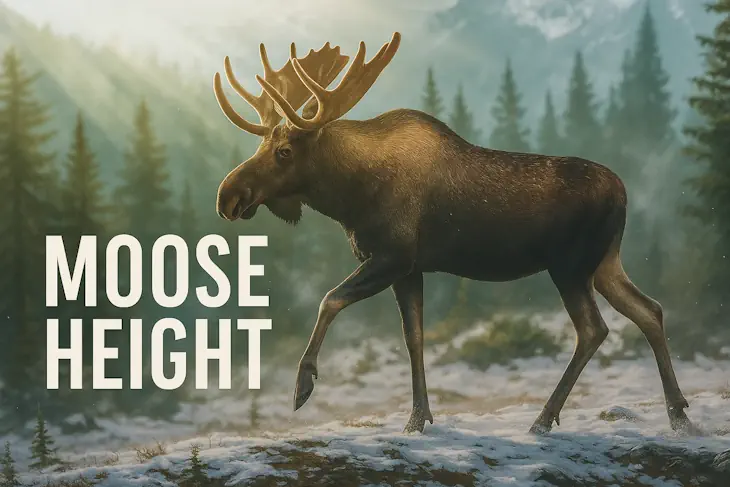
A full-grown moose is seriously tall. On average, moose stand about 5 to 6.5 feet (1.5–2 m) tall at the shoulder, according to National Geographic and similar wildlife references.
That’s taller than most people — and that’s just to the shoulder, not including the head and antlers.
Average Height at the Shoulder
Because biologists measure “moose height” to the shoulder (not the top of the antlers), typical moose shoulder height is:
5–6.5 ft (1.5–2 m) from hoof to shoulder for most adults.
In metric, that’s roughly 150–200 cm tall at the shoulder.
DinoAnimals, which compiles measurements from scientific sources, gives a slightly wider global range:
1.4–2.1 m (4 ft 7 in – 6 ft 11 in) at the shoulder across all subspecies.
How does that compare to things you know?
Approximate shoulder heights:
Average adult human (worldwide male mean): ~5 ft 7 in (171 cm).
The Rock (Dwayne Johnson): 6 ft 5 in (196 cm).
Taylor Swift: about 5 ft 10 in (178 cm).
So a good-sized moose can be:
As tall at the shoulder as The Rock is standing upright, or
A foot taller at the shoulder than Taylor Swift.
And when a big bull lifts his head and antlers, he can easily reach 9–10 ft (2.7–3 m) off the ground — about as tall as a basketball hoop.
Subspecies & Maximum Size
Not all moose are the same size. Different subspecies across North America and Eurasia vary quite a bit.
Big vs. small moose
Alaskan / Alaska–Yukon moose (Alces alces gigas)
Largest subspecies.
Bulls can reach around 7 ft (2.1 m) at the shoulder.
Eastern, Western & Shiras moose (North America)
Often around 5.5–6.5 ft (1.7–2 m) at the shoulder.
European and Siberian moose (often called elk in Europe)
Typically in the 1.6–2 m shoulder-height range, with some bulls rivalling North American moose.
Tallest moose on record
The tallest confirmed moose ever recorded was a bull from the Yukon River (1897):
2.33 m (7 ft 8 in) at the shoulder
About 820 kg (1,808 lb) in weight.
That’s taller at the shoulder than a regulation door frame is high.
Why Moose Size Varies (Genetics, Geography & Diet)
Moose don’t all grow to the same size, even within a subspecies. Several factors play a role:
1. Genetics
Studies of Norwegian moose show that genetic structuring is one of the most important drivers of body mass differences between populations, even after accounting for age, sex, and environment.
In simple terms: some lineages are just “built bigger” — the same way some dog breeds are naturally larger than others.
2. Geography & Climate
Moose in colder, northern regions (like Alaska or Siberia) tend to be larger. This fits Bergmann’s rule, where animals in cold climates evolve bigger bodies, which lose heat more slowly. Large body size in moose helps reduce heat loss in frigid environments.
3. Diet & Habitat Quality
Moose eat huge amounts of woody plants and aquatic vegetation. Research on moose nutrition shows that when forage is more nutritious and abundant, animals grow larger and maintain better body condition.
Poor habitat or over-browsed areas can produce smaller, lighter moose, while lush willow and birch thickets in productive northern wetlands can support real giants.
Other Size Metrics: Length & Weight
Height is only part of the story. Moose are long, heavy animals.
From DinoAnimals and wildlife agencies:
Body length (nose to tail):
2.4–3.1 m (7 ft 10 in – 10 ft 2 in)
Typical adult weight:
Cows: 200–490 kg (441–1,080 lb)
Bulls: 380–700 kg (838–1,543 lb), with some Alaskan bulls up to ~1,600 lb.
Antler span (bulls):
Usually 1.2–1.5 m (4–5 ft)
Record spreads up to 2.1 m (83 in) — wider than a king-size bed.
Size Comparisons: Moose vs Other Animals (and People)
Here’s how moose shoulder height stacks up against familiar things:
Average moose: 5–6.5 ft (1.5–2 m).
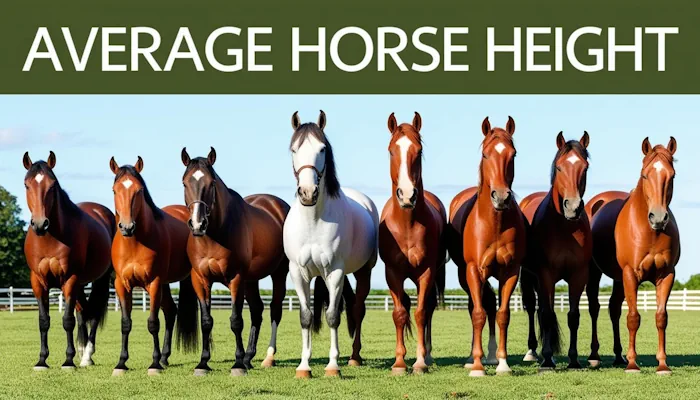
Average horse: most full-sized horses are about 14.2–16.2 hands, roughly 4.8–5.4 ft (1.5–1.65 m) at the withers.
Medium dog: many medium breeds stand 18–22 in (46–56 cm) at the shoulder — less than half a moose’s height.
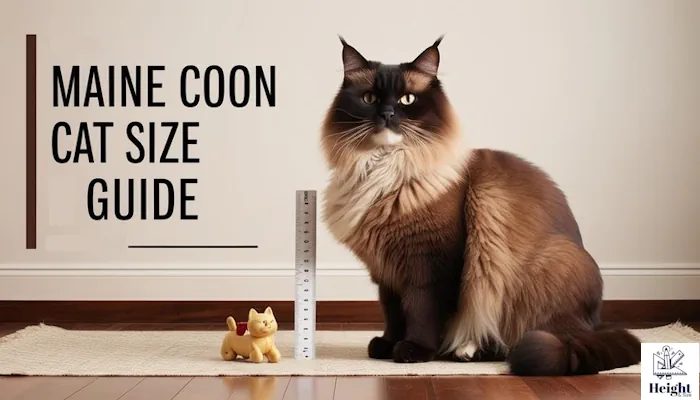
- Maine Coon: one of the largest domestic cats — typically 10–16 in (25–40 cm) tall at the shoulder and up to 40 in (101 cm) long (nose to tail)
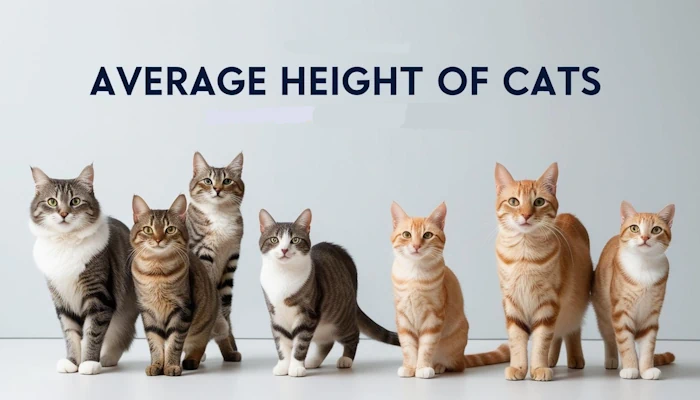
Domestic cat: about 9–10 in (23–25 cm) tall.
Average car: roughly 4–5 ft (1.2–1.5 m) high.
Standard fridge freezer: usually 5–6 ft (150–180 cm) tall.
So:
A moose is taller than most horses and can literally look over the roof of many cars.
Compared to a moose, a Maine Coon — despite being a giant cat — is still barely ankle-height.
Next to a moose, a regular cat or medium dog looks like a toy.
And lined up beside a kitchen fridge, a moose’s shoulder is roughly fridge-height, but its head and antlers soar far above it.
How Their Height Helps Them in the Wild
Being tall isn’t just for show — moose height is a survival tool.
Reaching high vegetation
Moose prefer to browse on shrubs, tree shoots, and higher grasses because dropping their head all the way to the ground is awkward. Their height lets them feed efficiently on willow, birch, and aspen twigs that other deer can’t easily reach.Moving through deep snow
Long legs and a high shoulder line mean they can step over deep snow that would trap smaller animals. Their large, splayed hooves work like snowshoes, spreading weight and keeping them from sinking too much.Wading and swimming
Moose are powerful swimmers and often feed on aquatic plants. Their height helps them wade through bogs and ponds where shorter animals would be forced to swim.Spotting danger
Like other tall animals (giraffes, camels), moose benefit from a high vantage point. Their eye level lets them scan over shrubs for wolves, bears, and humans.
Quick Facts Table
| Measurement | Typical Range (Adults) |
|---|---|
| Moose shoulder height | 1.4–2.1 m (4 ft 7 in – 6 ft 11 in) |
| Body length | 2.4–3.1 m (7 ft 10 in – 10 ft 2 in) |
| Weight (cows) | 200–490 kg (441–1,080 lb) |
| Weight (bulls) | 380–700+ kg (838–1,543+ lb); Alaskan bulls up to ~1,600 lb. |
| Typical antler span | 1.2–1.5 m (4–5 ft); records up to 2.1 m (83 in). |
Frequently Asked Questions
How tall are moose in cm?
For most adults:
Typical moose shoulder height: ~150–200 cm (5–6.5 ft).
Across all subspecies, about 140–210 cm (1.4–2.1 m).
Exceptionally large Alaskan bulls can reach around 210 cm (2.1 m) at the shoulder.
What’s the tallest moose on record?
The tallest confirmed moose was a bull from the Yukon River (1897):
2.33 m (7 ft 8 in) at the shoulder
Roughly 820 kg (1,808 lb) in weight.
That’s taller at the shoulder than a lot of NBA players are standing up.
Why are some moose taller than others?
Main reasons:
Genetics: some populations are genetically predisposed to larger body size.
Climate & geography: colder northern regions select for larger, more heat-efficient bodies.
Diet & habitat quality: better nutrition and productive habitats produce bigger, heavier animals; poor forage leads to smaller individuals.
Age & sex: mature bulls are taller and heavier than cows or young moose.
Final Thoughts — The Majestic Size of Moose
When people ask “how tall is a moose, really?”, the short answer is: about as tall as a big human at the shoulder, and much taller once you add the head and antlers.
Whether you imagine one standing next to The Rock, Taylor Swift, your car, or your fridge, moose height is impressive — and perfectly tuned to life in cold, forested, and snowy landscapes. Their towering stature isn’t just awe-inspiring; it’s a key part of what makes them such successful giants of the northern wilderness.